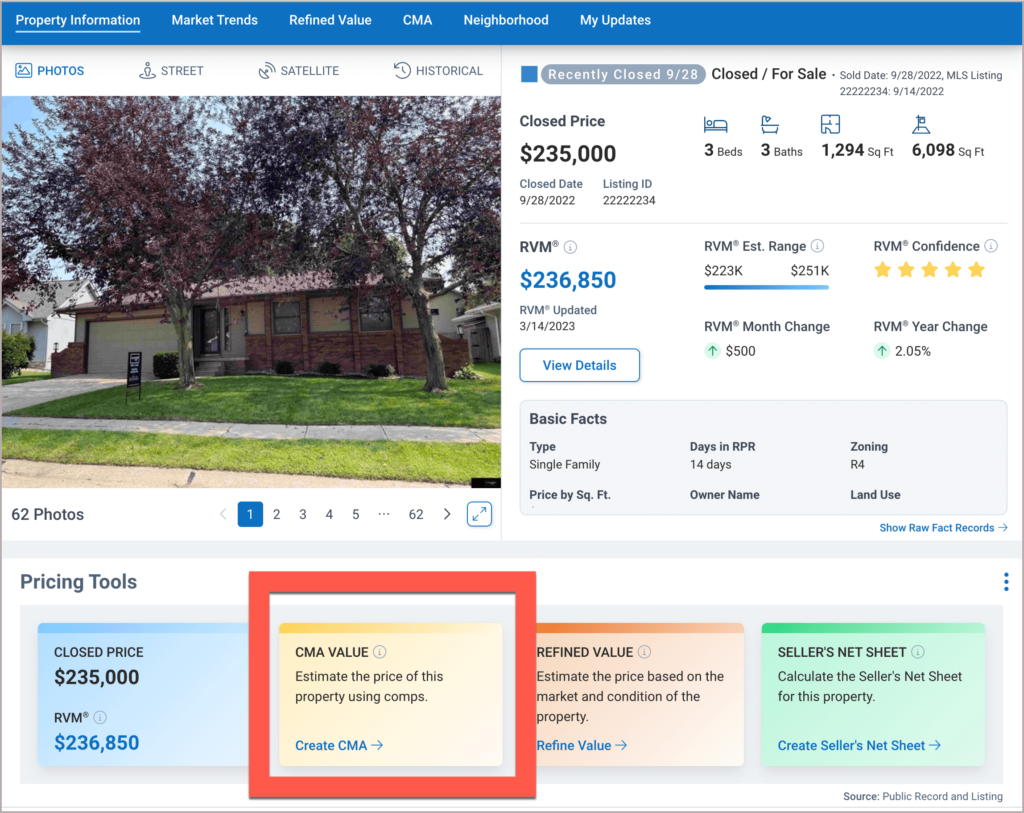
To access the CMA tool, go to the Property Information page of any residential property and click the Create CMA link in the Pricing Tools section.
You will land on our 5-Step CMA page where you will review the property facts, find comps, make adjustments, and create a report. Some steps are grayed out and unclickable until you complete the previous step.

Your Progress
Go to Step 1
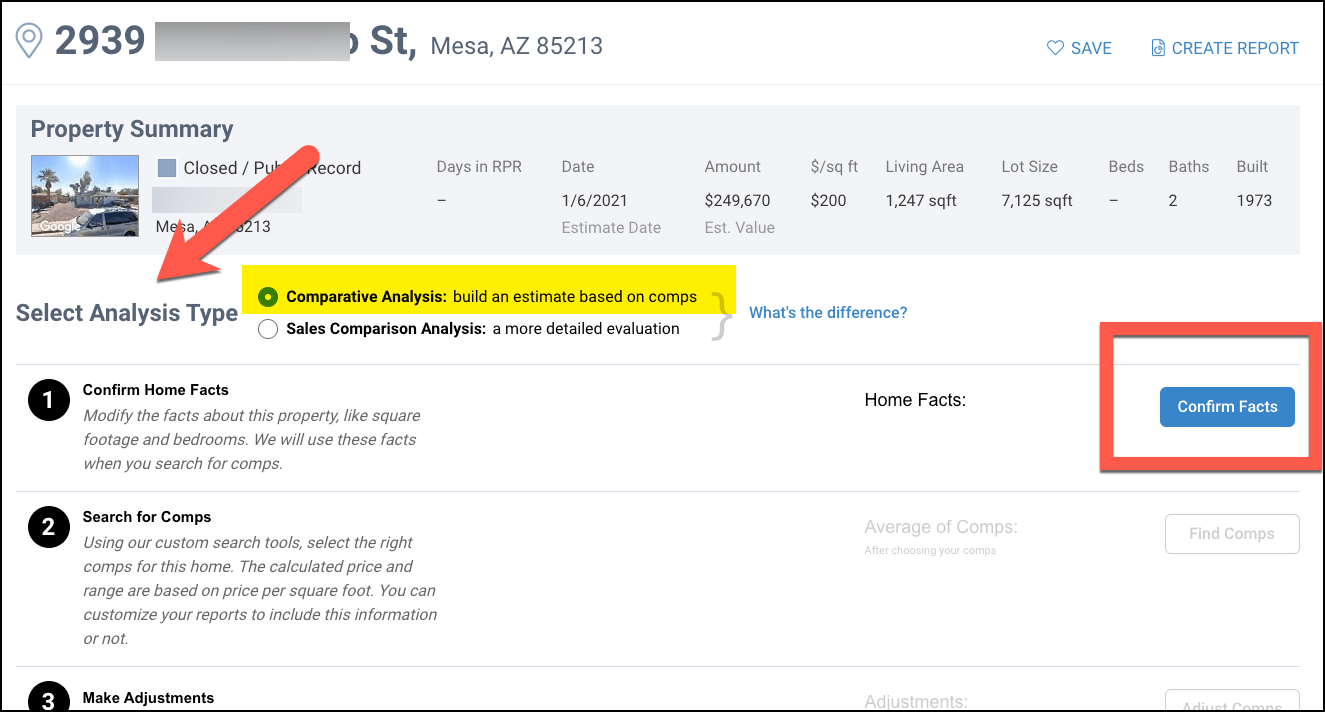
Important: Find Select Analysis Type and select the circle next to Comparative Analysis.
Select the Confirm Facts button.
Review the property facts and make any needed updates in the Your Changes column.
The asterisks indicate the property facts used to pull the comps. If any of these facts are missing, you will need to add a value in the Your Changes column.
Click the Confirm Facts and Close button.

Your Progress
Go to Step 2
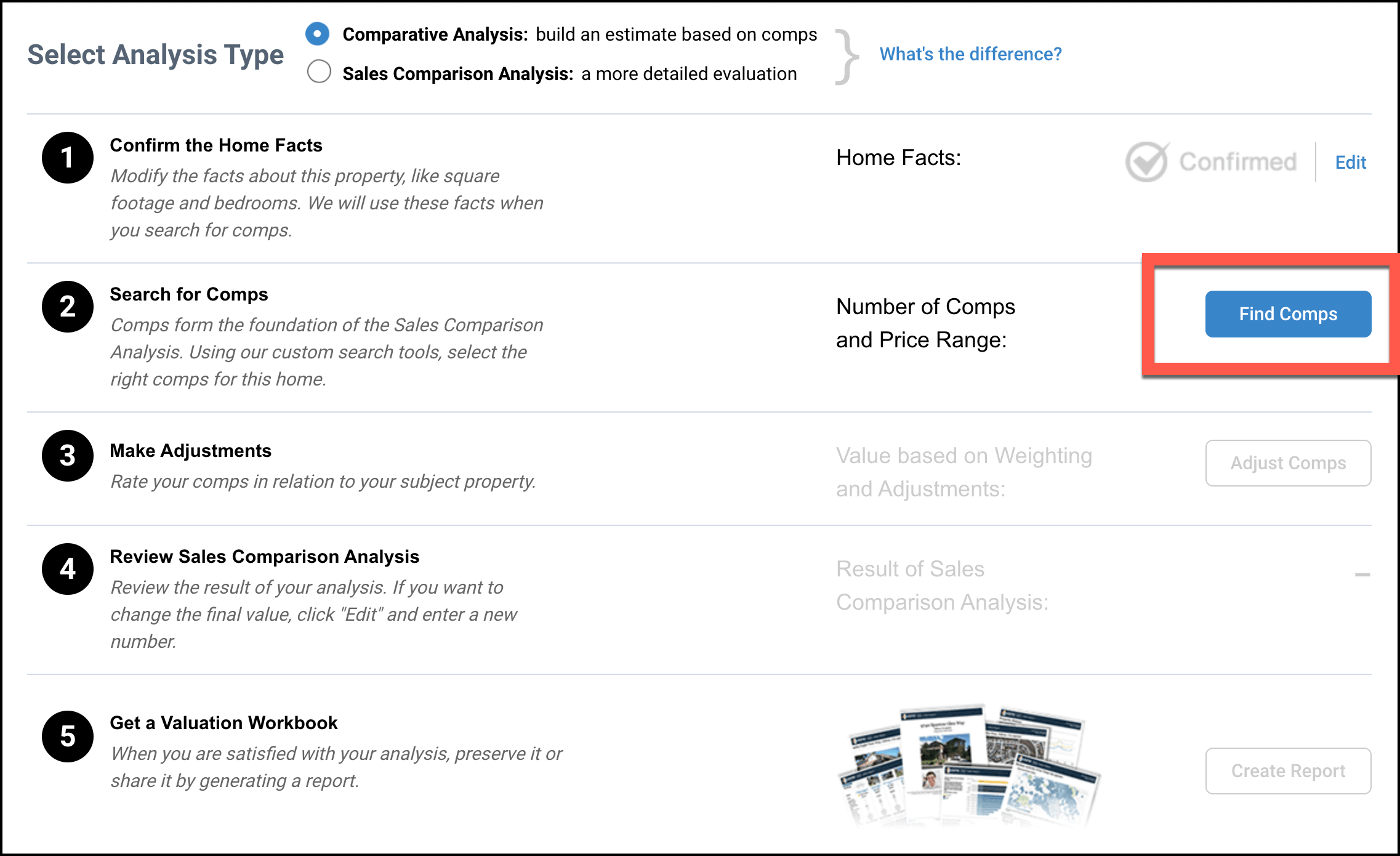
Click the Find Comps button.
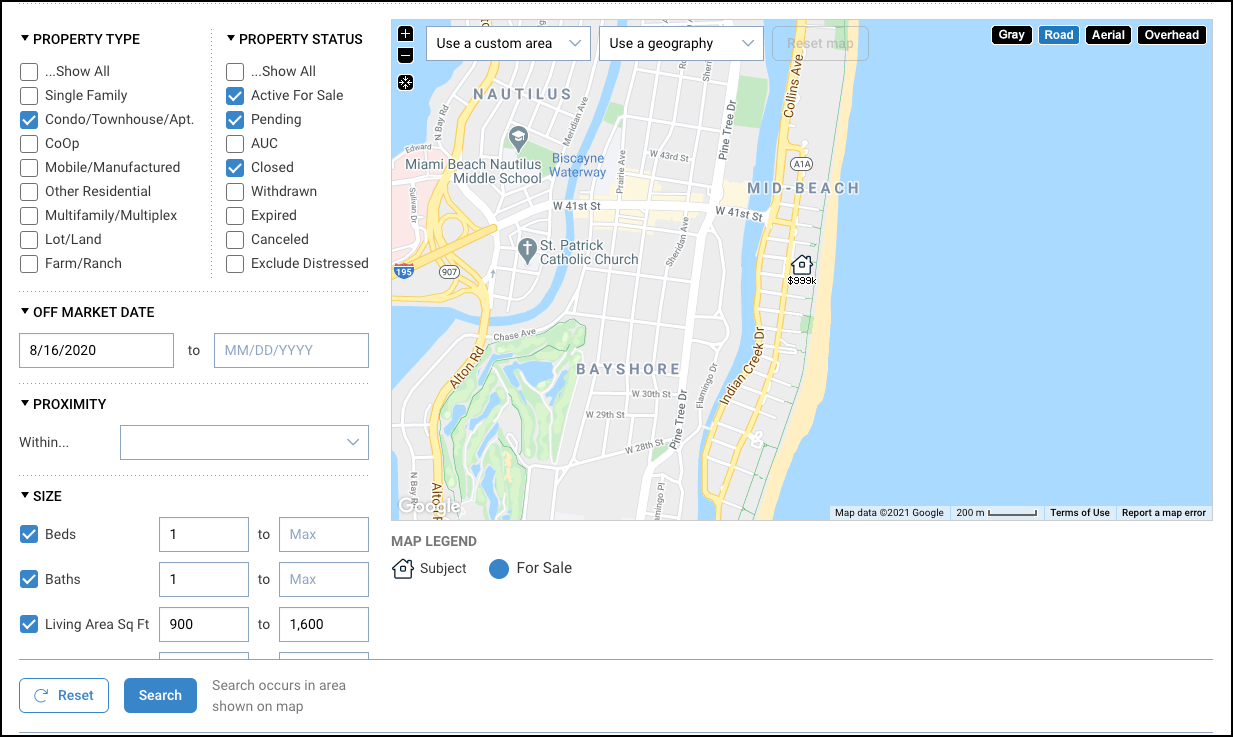
Select the filters that you would like to use from the panel on the left side of your screen
Click into a field to enter a number, date, or to choose from a drop-down menu.
Some fields populate with defaults based on the subject property, but there must be a checkmark in the box next to the item to apply the filter.
The search occurs within the area shown on the map.
Click the search button when you are finished apply filters.
You can also use the map to find comps. Click the + or – sign to zoom in or out of the map to increase or decrease your search area.
You can search within an area that you have previously saved. Choose an area from the Use a custom area drop-down menu.
Or search within a geography, like a neighborhood or a school attendance zone. Make a choice from the Use a geography drop-down menu.
Click the Search button when you are finished.
Click the box next Add to Comps List to select a comp. The comp will appear in the panel on the right side of your screen.
Select a comp property’s address to open its Property Summary to see the comp property’s RVM®/AVM, property facts, listing photos, etc.
Comps with a blue star indicate properties that were used in calculating the subject property’s RVM® or AVM.
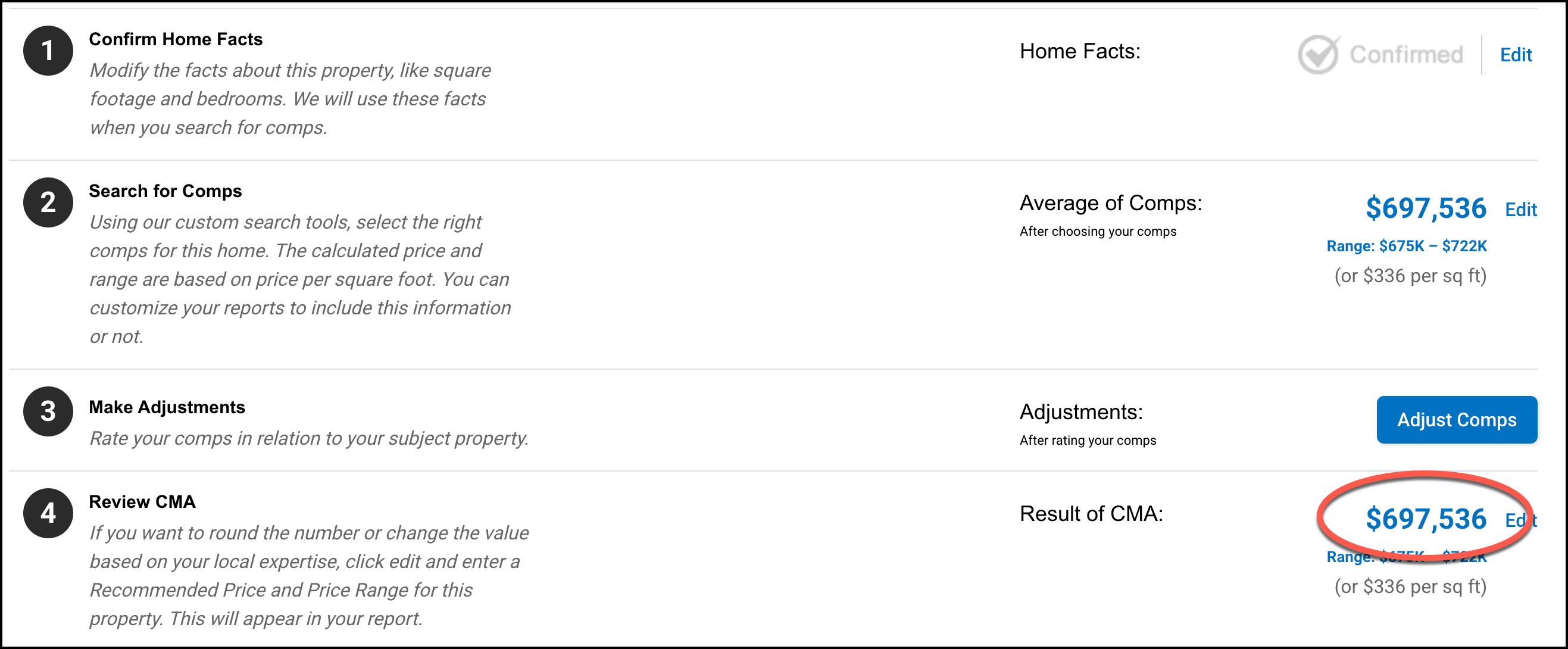
Keep in mind that the CMA calculation is based on the price per square foot.

Would you like to add a known property as a comp? Scroll to the top of the page and select Add a known property.
Enter an address or MLS ID (one at a time) in the field provided.
Click the Add button. The comp will be added to the panel on the right side of your screen.

Update Valuation and Close
Click the Update Valuation and Close button when you are finished.

Your Progress
Go to Step 3
Click the Adjust Comps button to consider how each comp compares to the subject property.

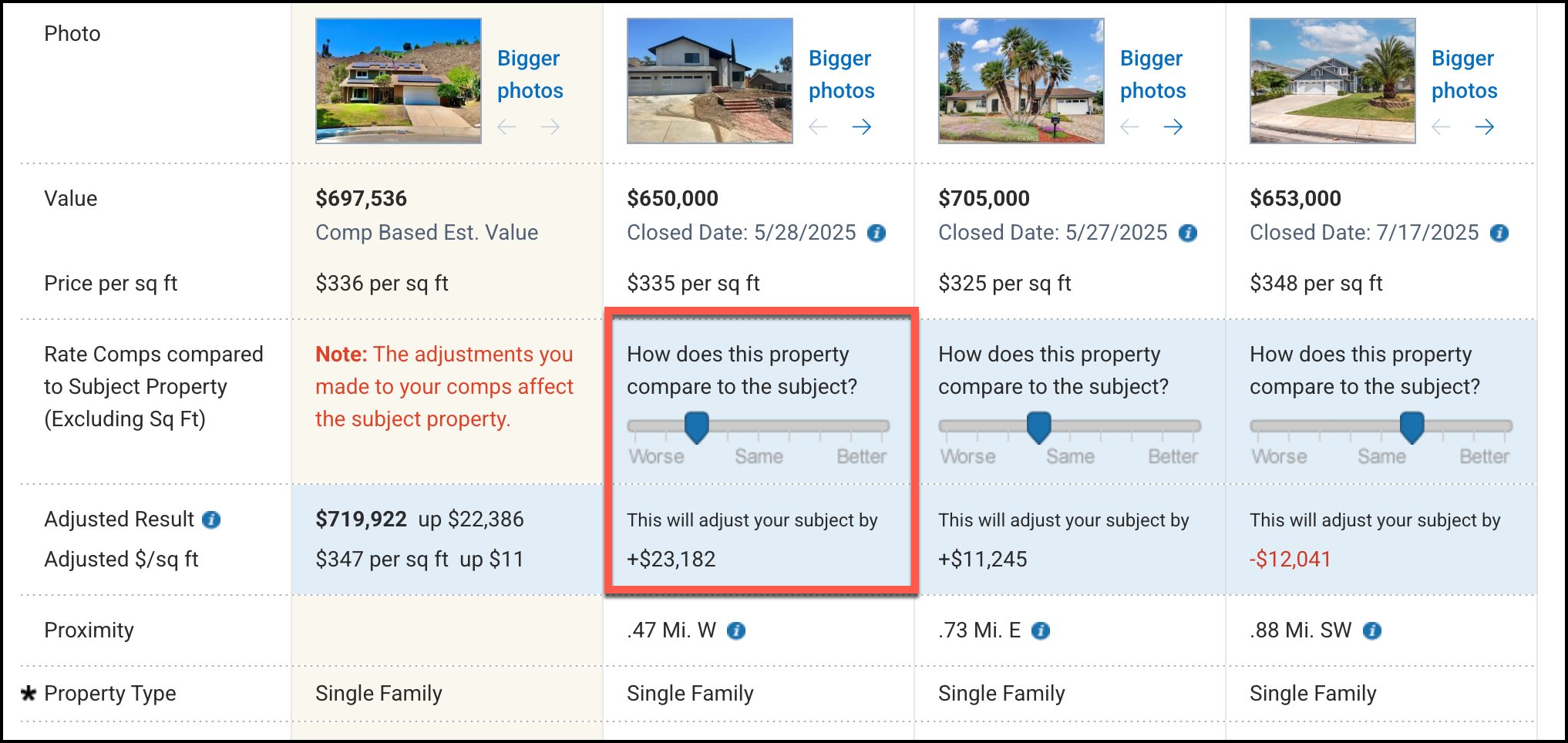
Rate each comp as it compares to the subject property.
Move the slider to the left or right to indicate that a comp is worse or better than the subject property.
Moving the slider changes the price per square foot that is applied when calculating the subject property estimate
Moving the slider to the left indicates that the comp is worse than the subject property and increases the subject property estimate.
Moving the slider to the right indicates that the comp is better than the subject property and decreases the subject property estimate.
Each comp’s price per square foot is multiplied by the subject property’s living area. The results for all your selected comps are averaged, yielding the subject property estimate.
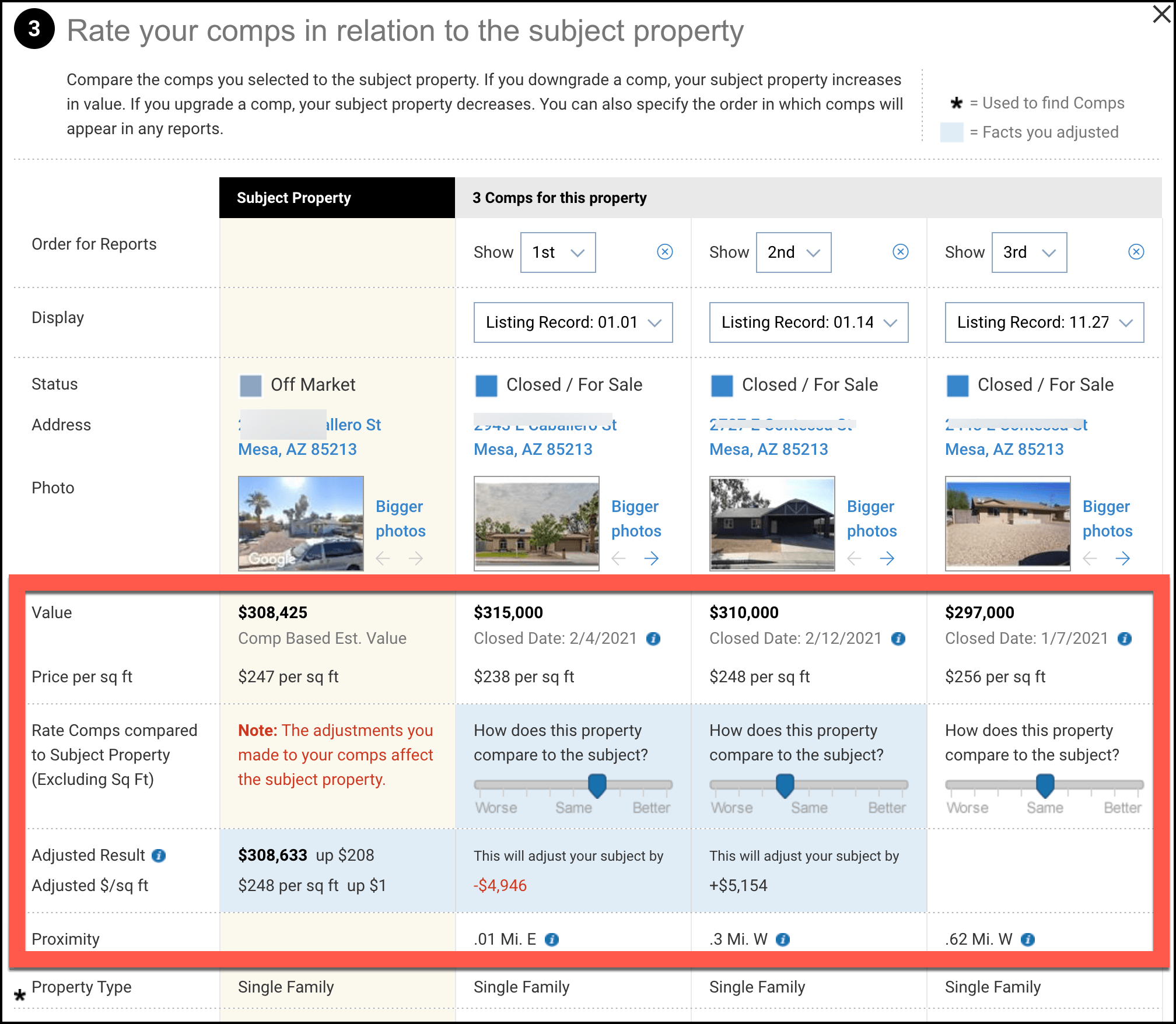
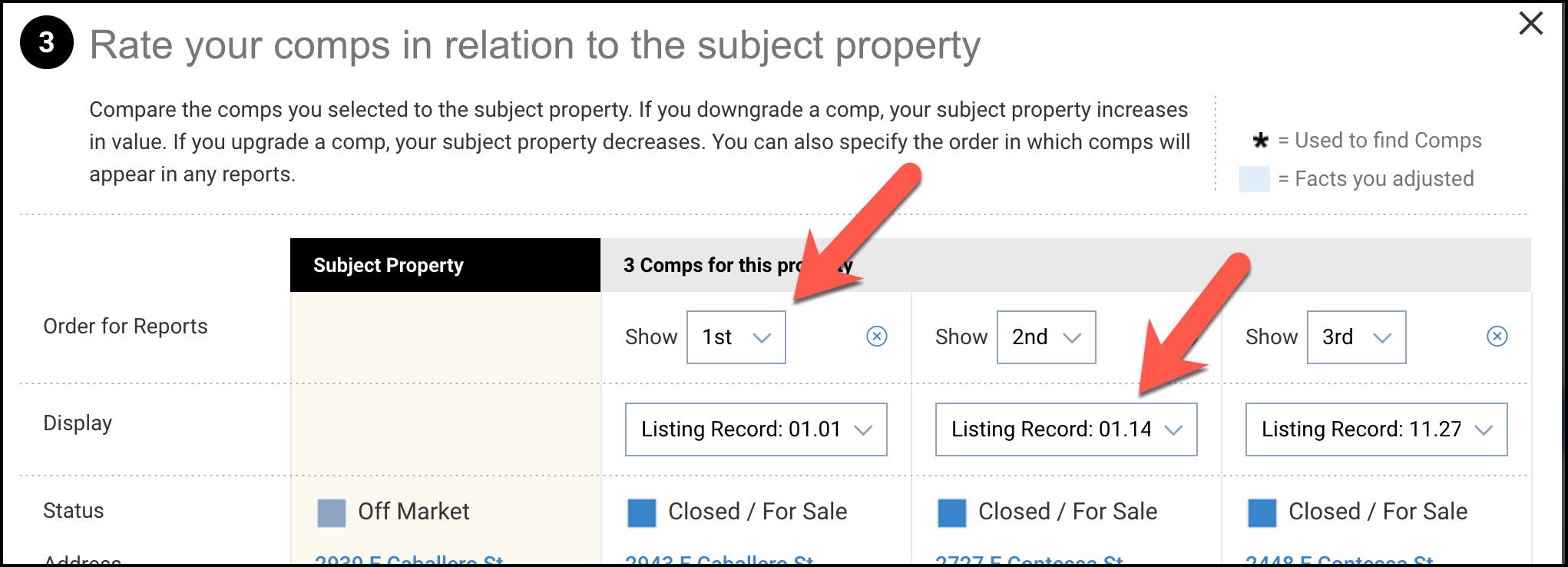
You can change the order that your comps will show in your report at the top of the page, within the Show drop-down.
You can also choose a different listing record, public record, or a value that you created using our Refined Value or CMA tools. See the drop-down menu just above the property status.
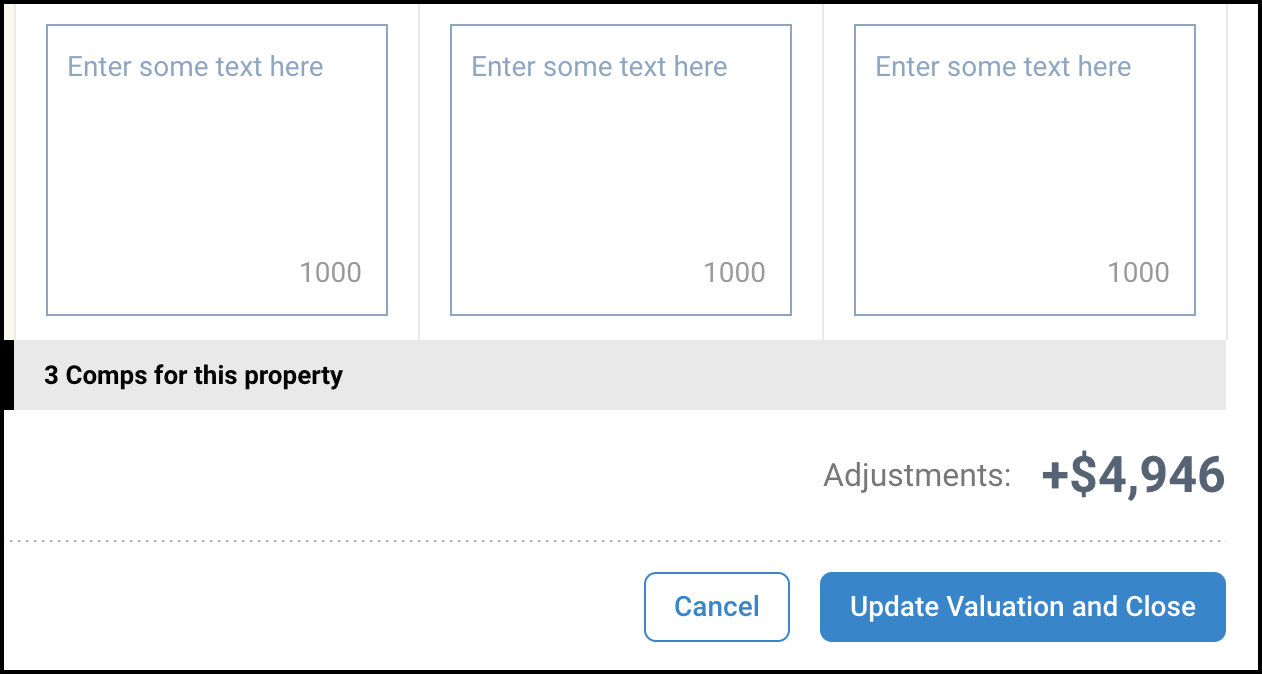
Update Valuation and Close
Click the Update Valuation and Close button at the bottom of the page to continue.
Your Progress
Go to Step 4
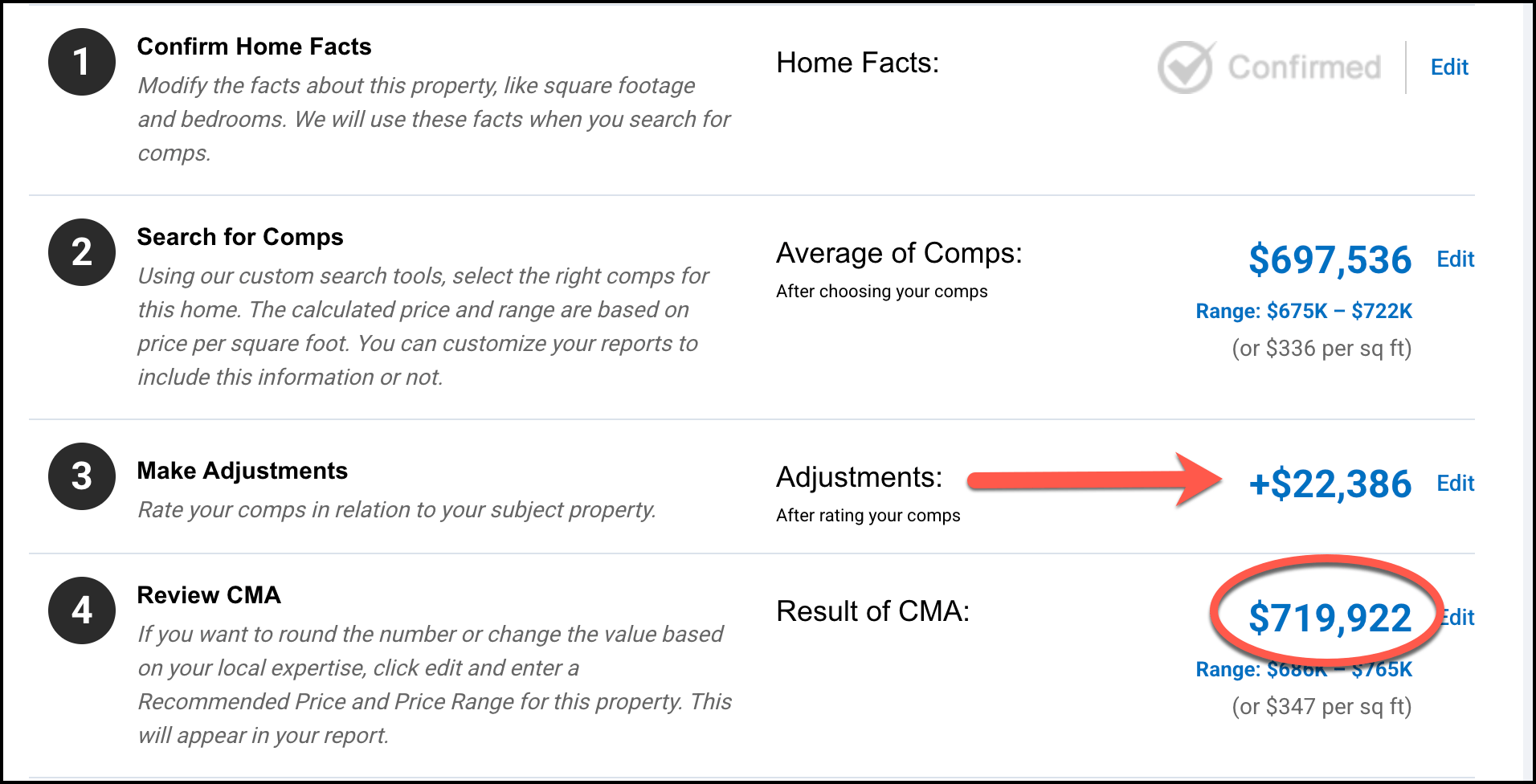
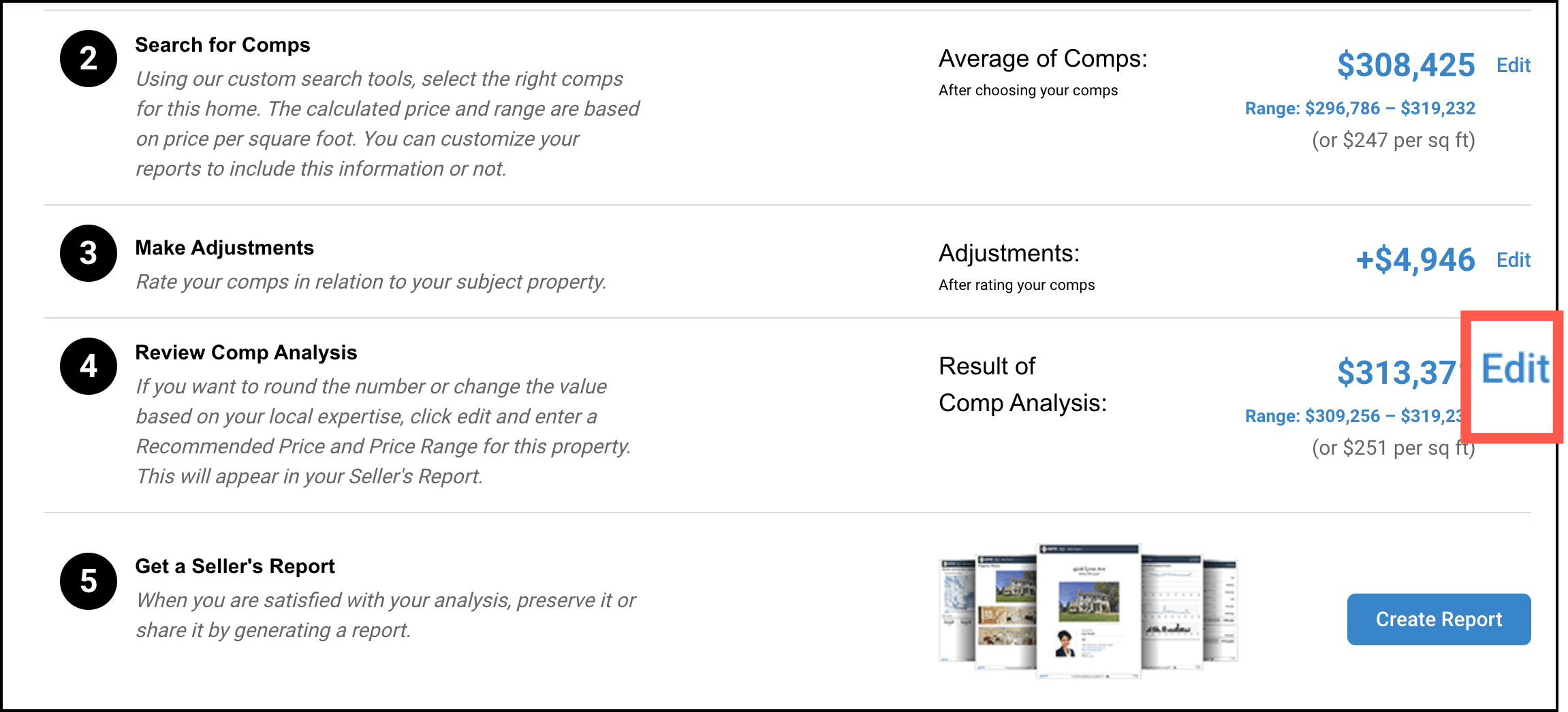
Review the result of your CMA. Click Edit if you want to edit the result or range (e.g. round up or narrow range). Click the Save button when finished.

Your Progress
Go to Step 5
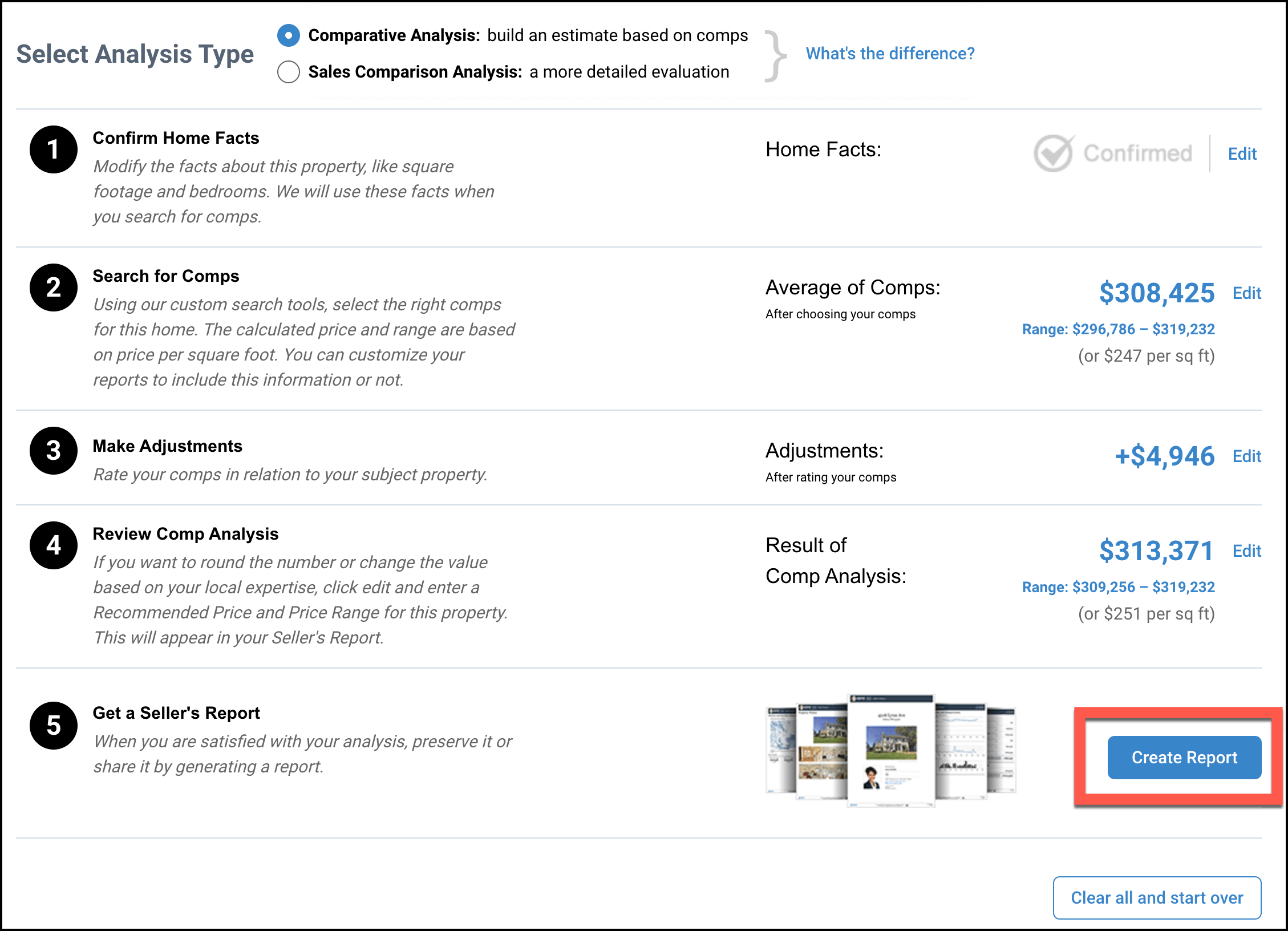
Click Create Report button and select the CMA, Buyer, or Seller Template. Or select Create Legacy Report to include your CMA in a legacy Property or Seller Report.
Your Progress